Choosing and booking
UTAGE Taiko Osaka: how to book the show
What the UTAGE taiko show in Osaka is, how it differs from a classical taiko concert, and what to settle about dates and cancellation before you book.
Book the taiko show ↗Quick answer
Book the UTAGE show if you want a short, loud, modern evening: taiko, shamisen, shakuhachi and shinobue set against electronic music, beside the Kaiyukan aquarium in Osaka. The ticket covers a 45-minute show and can be cancelled free until a day ahead, and a date can be held without paying today. It is not a classical ensemble concert, and the doors close once the show starts, so arrive at least five minutes early.
What the show is

UTAGE is a modern taiko show beside the Kaiyukan aquarium on Osaka's waterfront. It sets taiko drums, the three-stringed shamisen, the shakuhachi flute and the shinobue against computer-made music, with staging and visual effects around the players. The ticket is for a show of 45 minutes, and guests can be invited on stage to try Japanese instruments. It is built for visitors rather than specialists: reviewers describe an easy first evening of Japanese music, with English support. Think of it as a concert with a stage show's pace, not a recital: the sound is built to be felt as much as heard, and the staging gives the eye something to follow.
What the ticket covers
The ticket is an admission ticket for one performance. The booking calendar shows the days on sale and a start time for each, and your confirmation repeats the one you picked. The ticket carries a free-cancellation window of 24 hours, and a date can be held without paying today. Because sellers and options can differ, read the booking page for anything beyond admission before you assume it, such as a drink or a souvenir. The 45-minute length belongs to this ticket, so compare it with other tickets by running time too.
- Admission to one show
- Free cancellation up to 24 hours before
- Reserve now, pay later
- Start times in the booking calendar
Who it suits
It suits first-timers who want a compact evening of Japanese music without a long programme. Reviewers single out families with teenagers and couples ending a day at the aquarium. Guests who already love taiko describe it as a modern, rock-leaning take on the form and enjoy it for that. If you are travelling with friends who don't know what a shamisen is, the show does the explaining with sound rather than with talk, which keeps it easy to share.
How it differs from a classical taiko concert
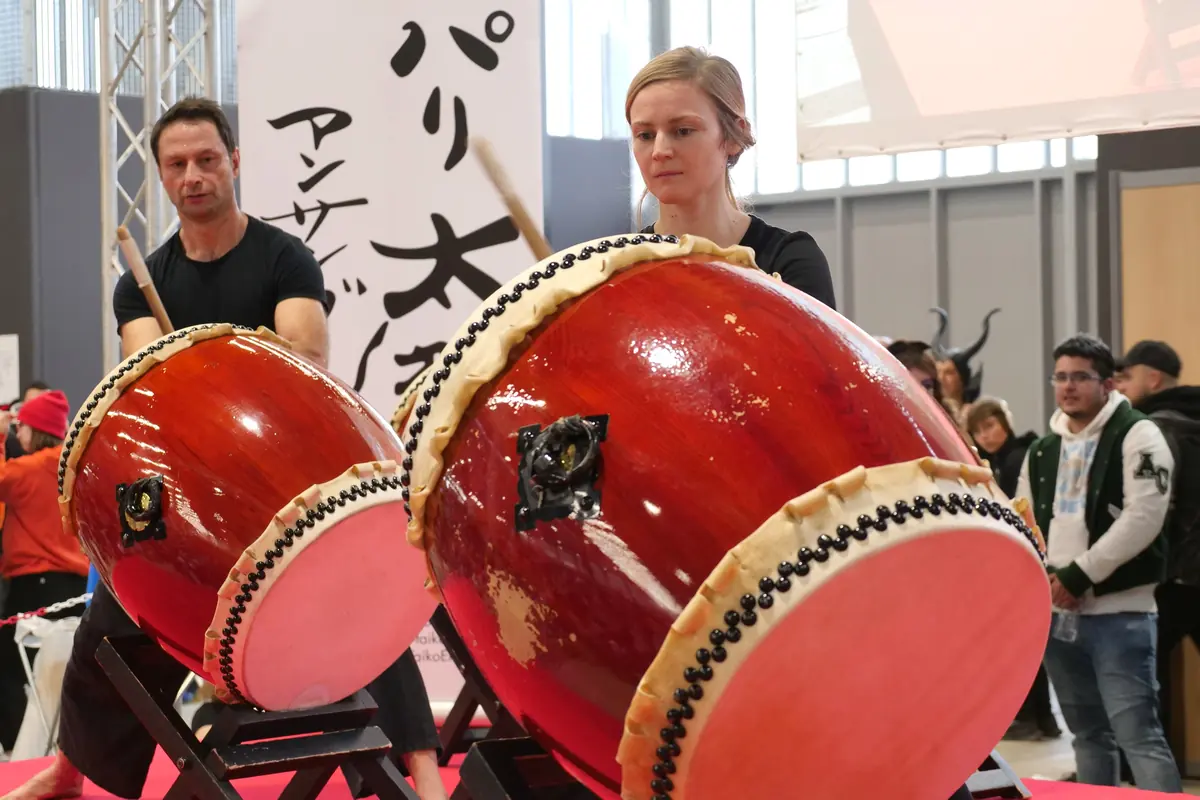
Kumi-daiko, the ensemble style of taiko, took shape in the early 1950s and became a concert art. Kodo, which debuted at a Berlin festival in 1981 and has toured the world since, is its best-known name. A concert like that puts the drums at the centre: big drums, small drums, voices and body movement. UTAGE shifts the balance. The drums share the stage with string and bamboo instruments and with electronic music, and the audience is drawn in. Neither is the better night; they answer different questions. UTAGE asks what taiko sounds like with a modern beat under it.
The instruments you will hear
Four instruments are named for the show. Taiko are barrel-shaped drums with skin stretched over both ends, from small tunable drums to very large ones. The shamisen is a plucked instrument with three strings. The shakuhachi is an end-blown bamboo flute, and the shinobue is a high-pitched transverse bamboo flute heard in festival music and in kabuki and noh. Each has its own tradition. Hearing them together with electronic music is the point of this show, and the guide to the three non-drum instruments explains each one in more detail, including what makes its sound distinctive.
Read next: Shamisen, shakuhachi, shinobue: a guide
Choosing the date
Pick the day first, then the start time, in the booking calendar. Holding a date costs nothing today, and the ticket cancels free up to 24 hours before, so a firm date is not a risk if your plans may shift. Once the show begins, entry is closed for production reasons, so build the evening around being at the door well before the start rather than just in time. The calendar and your confirmation are the only authority on times; treat anything else, including this page, as background. If you are building a wider trip around the date, book the show first and fit the rest around it.
Booking here or elsewhere
This site is an independent guide and sells nothing itself. The booking link goes to GetYourGuide, whose ticket for this show offers free cancellation until 24 hours before and lets you hold a date unpaid. The show can be sold through other channels too. If you are comparing sellers, set the cancellation terms and the start-time options beside the headline price, because each seller sets its own rules and the cheapest listing is not always the most flexible one. For a show this short, flexibility is worth more than a small saving, and the cancellation window is easy to compare.
UTAGE or the samurai and kabuki show
A second Osaka ticket covers a show that blends samurai, kabuki, ninja, taiko and dance with dance music and lights. It is a modern fusion show rather than a traditional performance, with interactive segments where guests clap, chant and step on stage, and it includes mature themes, suggestive lyrics and revealing costumes. UTAGE is the closer fit if the drums and the traditional instruments are what you came for. If you want a broader pop-culture spectacle, read that ticket in full before booking, especially for a family.
What guests say about it
Reviews return to the same few points. Guests praise the energy, the skill of the musicians and the way the audience is drawn in, and one calls the show a highlight of a trip to Japan. Some say the 45 minutes pass quickly, and some find it short, which is worth knowing if you want a full evening from a single ticket. Parents of teenagers describe it as easy for mixed ages, and one reviewer says it suits all ages. Those who love taiko call it a modern, rock-leaning take on the art. Treat these as guests' impressions, not promises about any one night's programme.
A short checklist before the day
Confirm the date and the start time in your booking, and screenshot the confirmation so you can show it at the door. Decide how you will reach Tempozan and allow extra time for your first visit to the harbour area. Plan a meal around the show rather than inside it, unless your option says otherwise. Wear something comfortable that you can move in, in case you are invited up. And keep the cancellation window in mind: you get your money back up to 24 hours before the show, so a change of plan is easy to handle early.
Who this isn't for
Skip UTAGE if you want a quiet, reverent recital of traditional music, because taiko is played at full force and guests describe feeling the drums in the chest. Skip it if you expect a long programme, since the show on this ticket runs 45 minutes. It is the wrong choice for anyone who may arrive late, because there is no entry after the show begins. And if you want a guaranteed turn on stage, note that invitations are part of the show rather than something the ticket promises.
Frequently asked questions
How long is the UTAGE show?
The show on this ticket runs 45 minutes. Each date in the booking calendar has its own start time, and your confirmation repeats the one you chose.
Can I cancel the ticket?
Yes. Cancel up to a day ahead and the GetYourGuide ticket is refunded in full. A date can also be held without paying today.
What if I arrive late?
You will not be let in. The ticket asks guests to arrive at least five minutes before the start, and entry is closed once the show begins for production reasons.
Is it a traditional performance?
The instruments are traditional and the music is modern. One guest calls it a modern rock take on taiko, with electronic music beside shamisen and bamboo flutes.
Will I be pulled on stage?
Guests can be invited up to try Japanese instruments and join one song for a limited time. It is part of the show, so no ticket can promise it for a given night.
Do I need to speak Japanese?
No. The music carries the show, and guests mention English support. The booking page shows the language options for your date.
Sources